Montana has no general sales tax, so the price on a shelf, a menu or a gift-shop tag is usually what you pay. That is not the whole story. Every night in a hotel, motel, vacation rental or campground carries an 8% state lodging tax, rental cars carry a 4% tax, and ten resort towns and areas add a local resort tax of their own on rooms, meals and drinks.
The bigger savings come from how you plan: which passes you buy, where you sleep, which months you travel and how far you drive. This guide gives the 2026 numbers for each, with links to our pages on the free and low-cost sights.
Taxes: no sales tax, but lodging and resort taxes
The Montana Department of Revenue charges a combined 8% lodging facility sales and use tax (4% use tax plus 4% sales tax). It applies to hotels, motels, resorts, bed and breakfasts, hostels, dude and guest ranches, vacation rentals booked through online platforms, and campgrounds. Stays of 30 continuous days or more are exempt. Car rentals of 30 days or less carry a separate 4% rental vehicle tax.
On top of that, state law lets small tourist towns levy a resort tax of up to 3% on lodging, restaurant meals, drinks and goods the law treats as luxuries, plus up to 1% more if voters approve it for infrastructure.
| Place | Resort tax (2026) | Notes |
|---|---|---|
| West Yellowstone | 4% | 3% since 1986, plus 1% approved in 2019 |
| Big Sky | 4% | 3% since 1992, plus a 1% infrastructure levy |
| Whitefish | 3% | Since 1996 |
| Red Lodge | 3% | Since 1998 |
| Virginia City | 3% | Since 1991 |
| Cooke City | 3% | Since 2006 |
| Gardiner | 3% | Since 2014 |
| Craig, St. Regis, Wolf Creek | 3% | Smaller resort areas |
Voters in the Big Mountain Resort Area, around Whitefish Mountain Resort, approved a 3% resort tax of their own in January 2025, which took effect on June 1, 2025. Resort taxes are run by each town, not the state, so a town can change its rate; the table follows the Department of Revenue's list and the towns' own pages.
In practice, a room in Big Sky or West Yellowstone costs about 12% more than the quoted rate, and a room in Bozeman, Missoula or Billings about 8% more.
Passes that pay off
| Pass | 2026 price | Pays off when |
|---|---|---|
| America the Beautiful (US residents) | $80 | You enter Glacier ($35) and Yellowstone ($35) plus one more fee site, such as Little Bighorn ($25) |
| America the Beautiful (non-US residents) | $250 | Two or more foreign adults visit even one of Glacier or Yellowstone |
| Montana state parks, nonresident 7-day | $35 | You visit state parks on five or more days in a week ($8 per vehicle per day otherwise) |
| Montana state parks, nonresident annual | $50 | You return in the same year, or visit on seven or more days |
- The $100 nonresident fee applies per person aged 16 and over at both Glacier and Yellowstone in 2026. Two foreign adults visiting both parks without a pass pay $70 in vehicle fees plus $400, against $250 for the nonresident annual pass, which waives the surcharge for the vehicle.
- Fee-free days for US citizens and residents in 2026 were February 16, May 25, June 14, July 3 to 5, August 25, September 17, October 27 and November 11. The last one this year is Veterans Day.
- Glacier's winter rate is $25 per vehicle from November 1 to April 30, against $35 in summer.
- Neither pass covers the CSKT Bison Range ($20 per vehicle) or tribal recreation permits.
- Children under 16 enter national parks free.
Free things to do
Many of Montana's best sights cost nothing beyond fuel.
- Museums and history: the Montana State Capitol (free guided tours), the Montana Heritage Center, the Original Governor's Mansion and Last Chance Gulch in Helena; the Smokejumper Visitor Center in Missoula; the Fort Peck Interpretive Center; Big Hole National Battlefield.
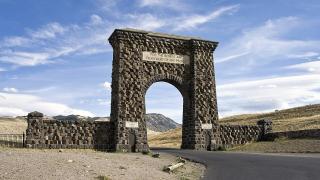
- Dams and landmarks: Hungry Horse Dam, the Great Falls of the Missouri, the Roosevelt Arch, and the slide and lake at Earthquake Lake.
- Trails: Jewel Basin, Ousel Falls, the M Trail, Mount Helena, the Rattlesnake above Missoula, Swords Rimrock Park in Billings and the River's Edge Trail in Great Falls.
- Scenery from the car: Paradise Valley and, in summer, the Beartooth Highway are free to drive; the park fee applies only past the Yellowstone entrance.
- Wildlife: the Charles M. Russell National Wildlife Refuge charges no entry fee.
Camping versus lodging
Camping is the single biggest saving, and Montana has a lot of public land to do it on.
| Option | 2026 cost per night |
|---|---|
| Glacier campgrounds | $15 to $30 per site; hiker/biker sites $8 per person |
| Yellowstone campgrounds booked on Recreation.gov | $20 to $25 |
| Montana state park campgrounds | $4 to $34, depending on season and hookups |
| National forest dispersed camping | Free, up to 16 days at one site |
| Clark Canyon Reservoir (Bureau of Reclamation) | No fee listed |
Remember that the 8% lodging tax applies to campgrounds as well as hotels. Our camping guide covers booking windows and bear rules. If you prefer a roof, staying in a larger town without a resort tax and driving in (Kalispell or Columbia Falls for Glacier, Bozeman or Livingston for Yellowstone) usually costs less than sleeping at the park gate.
Shoulder seasons
July and August are the most expensive months. The cheaper windows each give something up:
- Late May to mid-June: lower prices and green valleys, but Going-to-the-Sun Road is usually not fully open until late June or early July, and rivers run high.
- September: settled weather and thinner crowds. Many park services wind down after Labor Day.
- October: the cheapest month for the parks themselves, but Sun Road's alpine section and the Beartooth Highway close, and Yellowstone's interior roads close to cars after October 31.
- Winter: Glacier's entrance fee drops to $25 per vehicle, but ski towns charge their highest rates over Christmas and in February and March.
Fuel and driving distances
Montana is big, and fuel is a real line in the budget. The distances between towns, not the price per gallon, are what catch visitors out.
- Missoula to Bozeman is about 204 mi, and Missoula to Billings about 347 mi on I-90.
- Kalispell to Bozeman, the usual Glacier-to-Yellowstone transfer, is about 313 mi; Bozeman to Gardiner about 74 mi.
- East of the mountains, Miles City to Jordan is about 84 mi on MT-59 with almost nothing in between, and Lewistown to Malta about 143 mi on US-191.
- Fuel inside Glacier and Yellowstone is limited and costs more. Fill up in West Glacier, St. Mary, Gardiner or West Yellowstone first.
Planning a loop instead of out-and-back drives, and basing yourself in one town for several days, saves more than hunting for cheap fuel.
Before you go
- Add 8% to any quoted room or campsite rate, and 11% to 12% in resort-tax towns.
- Buy an $80 or $250 America the Beautiful pass if you will visit both big parks.
- Buy the $35 nonresident state parks 7-day pass for a week of state parks.
- Book campsites early, and know which ones are first-come.
- Travel in June or September if you can live with partial closures.
- Fill your tank at half on long eastern stretches.
Details checked October 2026.