Montana is one of the best places in the lower 48 to see big animals in the wild: bison, elk, wolves, grizzly bears, mountain goats and pronghorn, plus huge flocks of migrating birds. Seeing them comes down to being in the right place in the right season, and usually at the right hour. Dawn and dusk beat midday almost everywhere.
Below are the most dependable spots, what you are likely to see and when, and the rules for watching safely. One clarification first: the Lamar Valley, the most famous wolf-watching spot near Montana, is in Wyoming, inside Yellowstone. You reach it from Montana through Gardiner or Cooke City.
Where and when: the short list
| Place | Main animals | Best time | Access |
|---|---|---|---|
| Lamar Valley, Yellowstone (Wyoming) | Wolves, bison, elk, pronghorn, bears | Dawn and dusk, all year | ~24 road miles from Cooke City; open to cars all year via Gardiner |
| CSKT Bison Range, Moiese | Bison (~350), elk, pronghorn, bighorn sheep | May-October for Red Sleep Drive | About 1 hour north of Missoula |
| Slippery Ann, CMR Refuge | Elk during the rut | Mid-September to early October, late afternoon | Off US-191 |
| Freezout Lake WMA | Snow geese, tundra swans | Late March to early April | US-89 between Fairfield and Choteau |
| Logan Pass, Glacier | Mountain goats, bighorn sheep, marmots | July to mid-September | Going-to-the-Sun Road |
| Goat Lick Overlook, US-2 | Mountain goats | April-August, busiest late June-July | Near Essex, Glacier's southern edge |
Lamar Valley (Yellowstone, Wyoming)
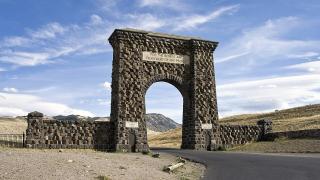
The Lamar Valley lies along the Northeast Entrance Road between Tower-Roosevelt Junction and the Northeast Entrance at Silver Gate and Cooke City. The National Park Service calls Yellowstone's northern range "one of the best places in the world to watch wolves", which were reintroduced in 1995 and 1996. Bison herds are almost guaranteed; elk, pronghorn, coyotes and grizzlies are common.
The road from Gardiner through Mammoth and the Lamar Valley to Cooke City is the only road in Yellowstone open to ordinary cars all year, which makes winter wolf watching possible. Mammoth itself is also in Wyoming, about 15 minutes from Gardiner. Bring binoculars or a spotting scope, pull fully off the road in marked pullouts, and keep the 100-yard rule for wolves and bears. The park entrance fee is $35 per private vehicle for seven days in 2026, plus $100 per person for non-US residents aged 16 and over without an annual pass.
CSKT Bison Range
The former National Bison Range near Moiese has been owned and managed by the Confederated Salish and Kootenai Tribes since Congress restored it in 2020; the tribes have run it fully since 2022. About 350 bison share about 18,800 acres with elk, pronghorn, bighorn sheep, deer and black bears.
- Red Sleep Drive plus Prairie Drive make a loop of about 19 miles that takes around two hours. Red Sleep is open in summer only; in 2026 it is expected to close for the winter on November 2.
- Hours: 7 a.m.-8 p.m. from May to October; 8 a.m.-6 p.m. from November to April, when only Prairie Drive is open, weather allowing.
- Fees: $20 day pass per vehicle. Federal passes are not accepted.
- Rules: stay in or beside your car except at trails and picnic areas; no trailers, motorcycles or bicycles on the drives; no drones.
Elk rut at Slippery Ann (CMR Refuge)
At the Slippery Ann Elk Viewing Area in the Charles M. Russell National Wildlife Refuge, hundreds of elk gather in the Missouri River bottom each autumn. Numbers usually peak from mid-September into early October. The viewing area is on a 20-mile all-weather gravel auto tour route off US-191, roughly 80 road miles from Lewistown.
Arrive in the late afternoon and stay until dark, when bulls bugle across the bottomland. Park on the south side of the road and stay at the road edge; the area beyond is closed, and spotlighting animals is not allowed. Facilities are vault toilets only. By late October the rut is winding down. In winter, bald eagles gather on open water below Fort Peck Dam, at the refuge's eastern end near Glasgow.
Snow geese at Freezout Lake
Each spring Freezout Lake Wildlife Management Area, about 11,300 acres of lakes and ponds managed by Montana FWP, fills with migrating waterfowl. FWP says up to 60,000 snow geese and 5,000 swans can be seen on the best days, and single-day counts in some years have been higher. The peak usually falls in the last week of March, but late ice can push it into April. The birds lift off the water around dawn to feed in nearby fields, which is the moment to be there.
The WMA is on US-89 between Fairfield and Choteau, roughly 40 miles from Great Falls. FWP posts migration counts on its waterfowl migration page, which is worth checking before you drive.
Mountain goats in Glacier
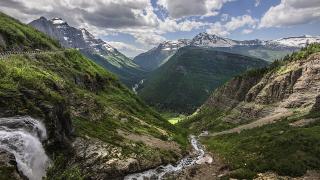
At Logan Pass and on the Hidden Lake Overlook Trail, mountain goats and bighorn sheep often graze beside the boardwalk. This is only possible while Going-to-the-Sun Road is open over the pass, usually from late June or early July to the third Monday of October. In 2026 a storm closed the alpine section on October 9.
The Goat Lick Overlook on US-2, about 2 miles east of the Walton Ranger Station near Essex, is the year-round alternative. Goats come to lick minerals from the river bank below, most often from April to August, with the largest numbers in late June and July. There is a small lot and a short paved path to the viewing deck.
Distance rules and no feeding
- 100 yards (91 m) from bears and wolves, and 25 yards (23 m) from all other animals. These are the rules in Glacier and Yellowstone, and the Bison Range uses the same distances.
- Never approach for a photo. Use a telephoto lens or binoculars. If an animal moves toward you, back away.
- Stay in or near your car at roadside sightings, and pull completely off the road. Don't stop in the travel lane.
- No feeding. It is prohibited in the parks, and Montana law (MCA 87-6-216) makes it illegal to feed deer, elk, bears and other big game, with fines of $50 to $1,000.
- Carry bear spray on any walk away from the car.
Before you go
- Pick the season first: geese in March, goats in July, elk rut in September, wolves year-round.
- Plan to be out at dawn or dusk.
- Pack binoculars and a long lens.
- Check road status for Going-to-the-Sun Road, the Bison Range drives and Yellowstone's northern road.
- Bring cash or card for park and range fees; federal passes don't work at the Bison Range.
- Keep your distance and never feed wildlife.
Details checked October 2026.