Montana's history is unusually easy to see on the ground. The rock paintings, buffalo jumps, expedition campsites, gold camps, battlefields, copper mansions and New Deal dams that mark each chapter are still standing, and most are open to visitors at least in summer. Statehood came on November 8, 1889, when Montana became the 41st state, but the story starts thousands of years earlier.
This is a short, visitor-oriented history in the order things happened, with each chapter tied to a place you can go. Opening times change with the seasons, and many of these sites close between mid-October and May; our museums guide and the linked attraction pages give current hours.
Tribal homelands
Montana today has 12 tribal nations and seven reservations, and many peoples hunted, traded and travelled here: the Blackfeet on the northern plains, the Crow in the Yellowstone and Bighorn country, the Salish, Kootenai and Pend d'Oreille west of the Divide, and the Assiniboine, Gros Ventre, Northern Cheyenne, Chippewa Cree and others.
- Pictograph Cave, on the edge of Billings, holds rock paintings more than 2,000 years old; excavations from 1937 recovered about 30,000 artifacts.
- First Peoples Buffalo Jump, near Great Falls, is a mile-long sandstone cliff where people drove bison over the edge for about a thousand years.
- The CSKT Bison Range near Moiese, has been fully managed by the Confederated Salish and Kootenai Tribes since 2022, after Congress restored the land to them in 2020.
Lewis and Clark and the fur trade, 1805–60
The expedition, 1805–06
The Corps of Discovery entered what is now Montana on April 27, 1805, and spent more time here than in any other state, on both the outbound and return journeys. Several of its sites can be visited.
| Date | Event | Where to go |
|---|---|---|
| June 13, 1805 | Meriwether Lewis reaches the Great Falls of the Missouri | Great Falls of the Missouri |
| June 18, 1805 | William Clark records Giant Springs during the portage | Giant Springs State Park |
| July 19, 1805 | Lewis names the Gates of the Mountains | Gates of the Mountains, near Helena |
| August 17, 1805 | Sacagawea recognises her brother Cameahwait at Camp Fortunate | Clark Canyon Reservoir, near Dillon |
| July 25, 1806 | Clark carves his name on the return journey | Pompeys Pillar, east of Billings |
Clark's signature at Pompeys Pillar is the only physical trace the expedition left on its route. The Forest Service's Lewis and Clark Interpretive Center in Great Falls is closed for renovation until April 1, 2027.
Fur trade and missions
After the expedition came traders. The American Fur Company built Fort Union in 1828 at the Missouri–Yellowstone confluence, on today's North Dakota line, and traded there with the Assiniboine, Crow, Blackfeet and others until 1867; Fort Benton followed as a trading post in 1847. In 1841 Jesuit missionaries led by Father Pierre-Jean De Smet settled among the Bitterroot Salish at Stevensville, and St. Mary's Mission, near Hamilton, marks what is often called Montana's first permanent settlement. Missoula began in 1860 as the Hellgate Trading Post.
The gold rush, 1862–64
Gold changed everything within three years:
- July 28, 1862: John White's party finds gold on Grasshopper Creek. Bannack passes 3,000 people within a year and becomes the first capital of Montana Territory, created in May 1864.
- May 26, 1863: gold in Alder Gulch founds Virginia City and Nevada City. Virginia City is the territorial capital from 1865 to 1875 and prints Montana's first newspaper, the Montana Post, from August 1864.
- January 1864: vigilantes hang Bannack's sheriff Henry Plummer and, at Virginia City, five alleged road agents now buried on Boot Hill.
- July 14, 1864: the "Four Georgians" strike gold at Last Chance Gulch, the start of Helena, which becomes the capital in 1875.
Later silver and gold camps such as Granite above Philipsburg and Garnet east of Missoula show how fast boomtowns emptied.
Little Bighorn and the wars of 1876–77
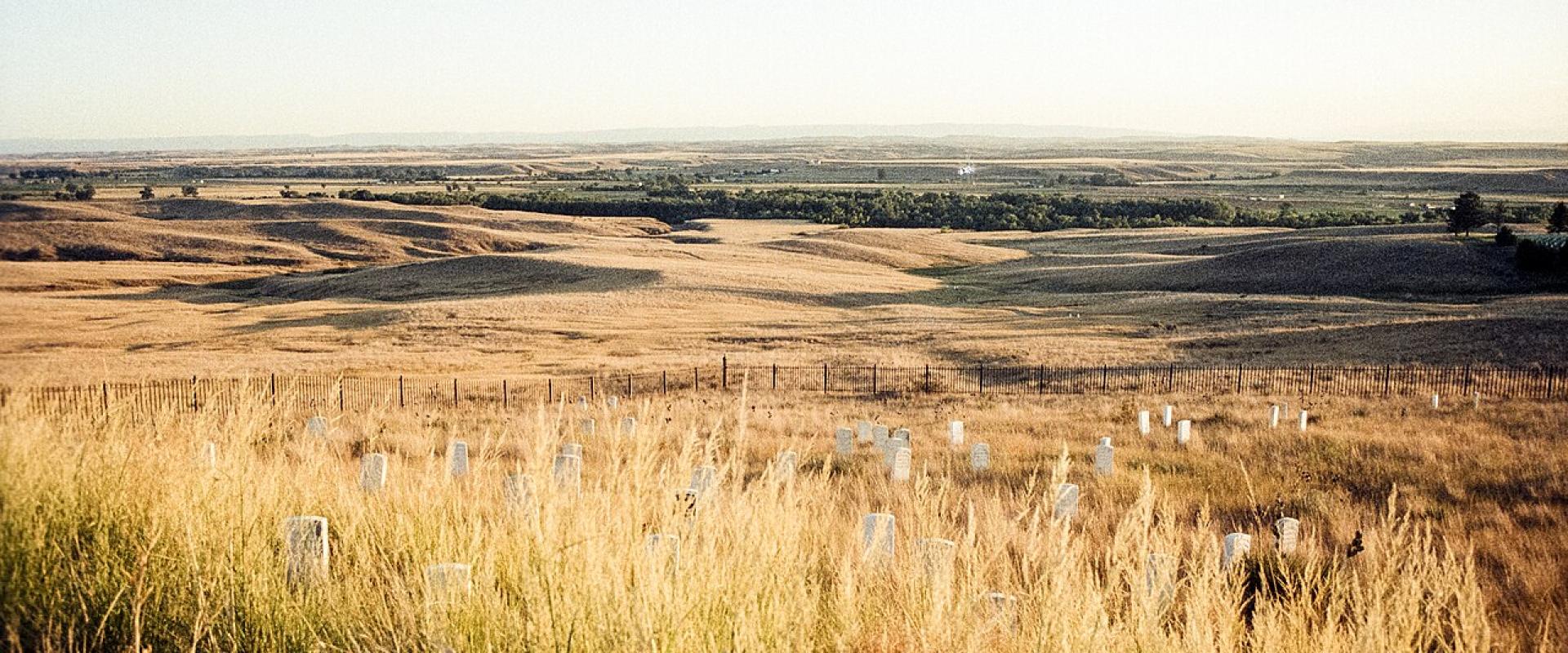
On June 25–26, 1876, Lakota, Northern Cheyenne and Arapaho warriors defeated the US 7th Cavalry under George Armstrong Custer at Little Bighorn Battlefield, near Crow Agency and about 16 road miles from Hardin. The army answered with new posts: the Tongue River Cantonment, founded in August 1876, grew into Miles City, and Fort Missoula followed in 1877. That August the army attacked a sleeping Nez Perce camp at dawn at Big Hole National Battlefield; the Park Service puts Nez Perce deaths at up to about 90, many of them women and children.
Railroads, statehood and the copper kings
The Northern Pacific founded Billings in 1882, reached Bozeman in 1883 and drove its last spike at Gold Creek, west of Helena, on September 8, 1883. The Great Northern followed across the Hi-Line; Kalispell was laid out as one of its division points in 1891. Montana had meanwhile become a state on November 8, 1889.
Below ground, Butte became "the Richest Hill on Earth". The Anaconda mine was the world's largest copper producer from 1892 to 1903, and by 1900 the Anaconda Copper Mining Company employed three-quarters of Montana's wage earners. The rivalry between the "copper kings" can still be read in their houses: W.A. Clark's 1888 Copper King Mansion in Butte, Marcus Daly's Daly Mansion in the Bitterroot, and the 585-foot smelter stack in Daly's company town of Anaconda. Their feud even decided the capital: in 1894 voters chose Clark-backed Helena over Daly's Anaconda. The World Museum of Mining and the Granite Mountain Memorial to the 168 men killed in the 1917 Speculator fire show the cost. Open-pit mining at the Berkeley Pit ran from 1955 to 1982.
Homesteaders, drought and the Fort Peck Dam
Early in the 1900s Congress doubled the standard homestead on dry land from 160 to 320 acres, and settlers poured onto the plains along the railroads. Then drought and hot winds ruined crops for several years after 1918, and between 1921 and 1925 half of the state's 428 banks closed. Abandoned homesteads still dot the eastern prairie. The Valley County Pioneer Museum in Glasgow and the Big Horn County Historical Museum in Hardin both preserve homestead buildings and stories.
The New Deal brought work. Fort Peck Dam, built from 1933 as a Public Works Administration project, employed 10,546 people at its peak in July 1936, and Margaret Bourke-White's photograph of its spillway was the cover of the first issue of Life on November 23, 1936.
The national parks
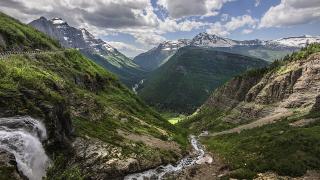
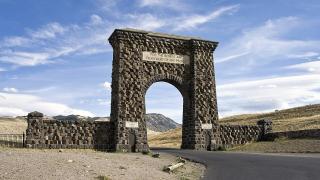
Yellowstone, created on March 1, 1872, was the first national park, and the Northern Pacific's branch line from Livingston up Paradise Valley became its original rail gateway. Theodore Roosevelt laid the cornerstone of the Roosevelt Arch at Gardiner in 1903. Glacier National Park followed on May 11, 1910, promoted by the Great Northern with hotels such as Many Glacier (1915). Going-to-the-Sun Road, built from 1921 to 1932 and dedicated on July 15, 1933, and the Beartooth Highway, opened in 1936, made both parks reachable by car.
Before you go
- Visit the free Montana Heritage Center in Helena first for the overview.
- Plan ghost-town and mansion visits between late May and September.
- At battlefields and tribal sites, stay on trails and treat them as places of mourning.
- Bring a park pass: Little Bighorn charges $25 per vehicle; Big Hole is free.
Details checked October 2026.