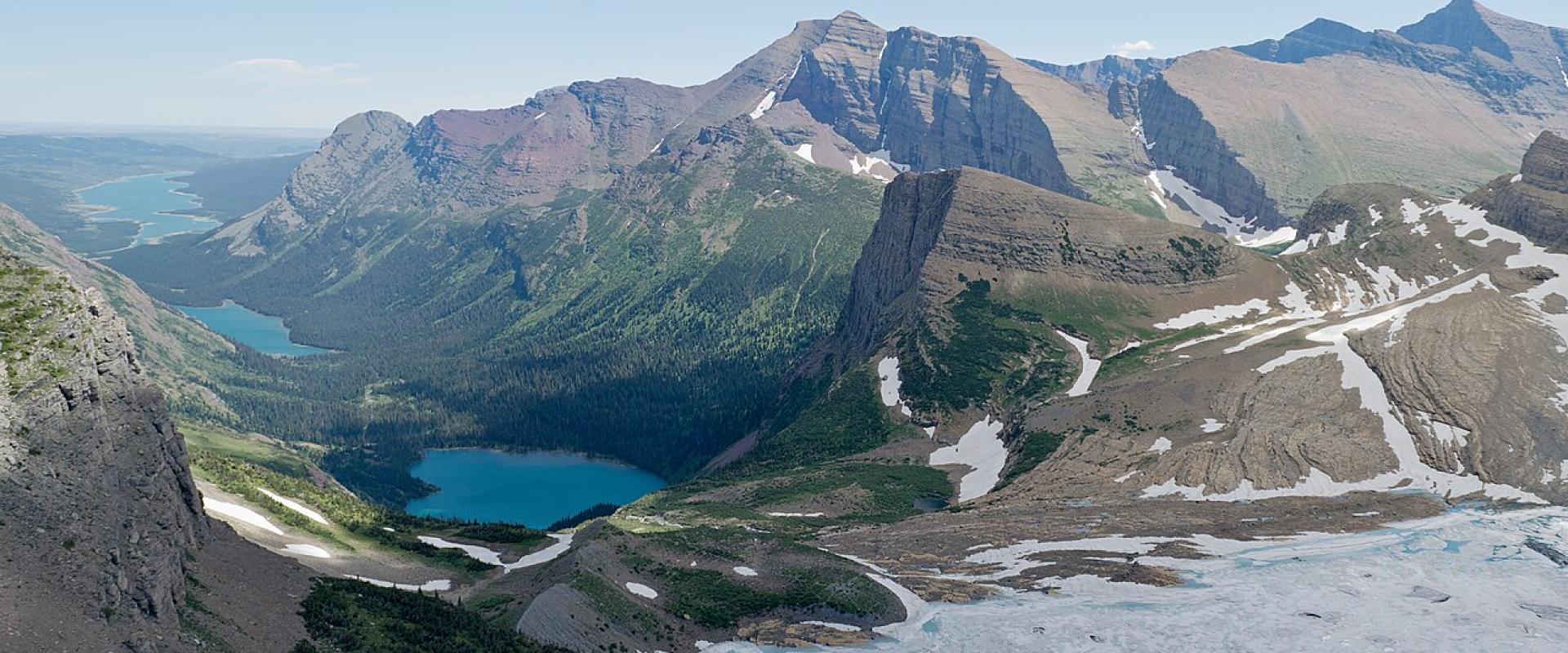
Montana has one national park entirely its own, Glacier, and a thin strip of a second, Yellowstone, which it reaches through three of the five entrances. Around them is a set of smaller federal history sites, mostly battlefields and frontier landmarks, and a state park system of 55 parks that leans toward ghost towns, caves, springs and archaeology rather than scenery alone.
This guide says what each site is for, when it is open and what it costs to enter, so you can decide which are worth building a trip around. For entrance fees and passes in detail, see our passes and permits guide.
Glacier National Park
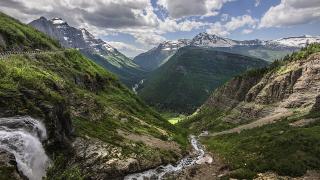
Glacier covers more than a million acres of the northern Rockies on the Canadian border. It was created on May 11, 1910, joined Canada's Waterton Lakes in 1932 as the world's first International Peace Park, and became a World Heritage Site with it in 1995.
- What it's for: day hikes to lakes and glaciers, wildlife (grizzlies, mountain goats, bighorn sheep), and the 50-mile Going-to-the-Sun Road over Logan Pass.
- Main areas: Lake McDonald and Apgar on the west side; Many Glacier, Saint Mary and Two Medicine on the east.
- Season: the full Sun Road is usually open from late June or early July to the third Monday of October (2026: June 22 to October 9). The lower west side is open all year, with the road plowed to Lake McDonald Lodge in winter.
- Gateways: West Glacier, Whitefish, Columbia Falls and St. Mary.
- 2026 rules: no vehicle reservations; a ticketed Logan Pass shuttle and three-hour Logan Pass parking from July 1 to September 7.
Yellowstone's Montana side
Yellowstone, the first national park (March 1, 1872), covers about 2.2 million acres, of which only about 3% is in Montana. But Montana's three entrances are the ones most visitors use outside midsummer.
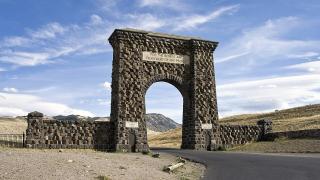
- North Entrance, Gardiner: through the Roosevelt Arch (1903) to Mammoth Hot Springs. The road from here east through the Lamar Valley to the Northeast Entrance is the only park road open to cars all year.
- West Entrance, West Yellowstone: the quickest way to Old Faithful and the geyser basins. Open to cars mid-April to October 31; guided snowmobile and snowcoach trips only from December 15, 2026 to March 15, 2027.
- Northeast Entrance, near Cooke City: reached in summer over the Beartooth Highway from Red Lodge, which runs from about Memorial Day to mid-October (it closed on October 9 in 2026).
Battlefields and history sites
Little Bighorn Battlefield National Monument
Near Crow Agency, about 16 road miles from Hardin. It preserves the ground where Lakota, Northern Cheyenne and Arapaho warriors defeated the 7th Cavalry under Custer on June 25–26, 1876; 2026 was the 150th anniversary. A 4.5-mile tour road links Last Stand Hill with the Reno-Benteen site. The visitor centre is being rebuilt, so a temporary contact station is in use. Open all year (8 a.m. to 4 p.m. in winter); $25 per vehicle, cards only. Read more.
Big Hole National Battlefield
About 10 miles west of Wisdom in southwest Montana. It marks the dawn attack on a Nez Perce camp on August 9, 1877, and is part of Nez Perce National Historical Park. Trails to the camp and siege sites are open sunrise to sunset all year; the visitor centre is on winter hours (Tuesday to Saturday) from mid-October to late May. No entrance fee. Read more.
Grant-Kohrs Ranch National Historic Site
At Deer Lodge, between Butte and Missoula off I-90. A working cattle ranch of about 1,600 acres with 88 historic buildings, it tells the story of the open-range cattle era. Guided tours of the ranch house run all year, and nearly 10 miles of ranch roads and trails are open to walkers. Hours are 9 a.m. to 5 p.m. from Memorial Day to Labor Day and 9 a.m. to 4:30 p.m. the rest of the year; closed Thanksgiving, December 25 and January 1. No entrance fee.
Pompeys Pillar National Monument
A sandstone butte 25 miles east of Billings, run by the BLM. William Clark carved his name and the date, July 25, 1806, into the rock: the only physical trace the Lewis and Clark Expedition left on its route. The 2026 season ran May 1 to September 30 (closed Tuesdays), $7 per vehicle. Out of season you can park outside the gate and walk in during daylight. Read more.
Other federal sites
- Bighorn Canyon National Recreation Area: Bighorn Lake behind Yellowtail Dam; the North District is reached from Fort Smith. No road connects the north and south districts inside the area.
- Upper Missouri River Breaks National Monument (BLM): about 377,000 acres of white cliffs and badlands, best seen by canoe on the Wild and Scenic Missouri.
- Fort Union Trading Post NHS: on the North Dakota line, the NPS unit in Missouri River Country.
The best-known state parks
| Park | Near | What it's for | Season |
|---|---|---|---|
| Lewis and Clark Caverns | Bozeman (about 50 mi) | Guided limestone cave tours; Montana's first state park (1938) | Tours May to September |
| Bannack | Dillon | Ghost town of the 1862 gold strike and first territorial capital | All year; visitor centre hours vary |
| Giant Springs | Great Falls | One of the largest US freshwater springs, River's Edge Trail | All year, sunrise to sunset |
| First Peoples Buffalo Jump | Great Falls (Ulm) | Mile-long bison cliff jump, visitor centre | All year; winter hours Wed to Sun |
| Pictograph Cave | Billings | Rock paintings over 2,000 years old | All year; winter hours Wed to Sun |
| Makoshika | Glendive | Montana's largest state park: badlands and dinosaur fossils | All year |
| Wild Horse Island | Flathead Lake | Boat-in day hike, bighorn sheep, wild horses | All year, by boat |
| Lone Pine | Kalispell | Short trails with views over the Flathead Valley | All year |
| Granite Ghost Town | Philipsburg | Silver-boom ruins at about 7,000 ft; high-clearance road | Memorial Day to September 30 |
| Anaconda Smoke Stack | Anaconda | Viewing area for the 585-ft smelter stack | All year |
Montana residents who paid the parks fee with their vehicle registration enter free; nonresidents pay $8 per vehicle a day or $50 for an annual pass in 2026. Many state parks switch to shorter hours from mid-September until May, so check the park's page on fwp.mt.gov before driving out.
Which pass covers what
- America the Beautiful ($80 for US residents, $250 for non-US residents): Glacier, Yellowstone, Little Bighorn and Pompeys Pillar. It also exempts the vehicle from the $100 per person nonresident fee at Glacier and Yellowstone.
- Montana state parks nonresident pass: state parks only.
- Neither: the CSKT Bison Range, which charges $20 per vehicle and accepts no federal passes.
Before you go
- Plan Glacier's high country for July to mid-September.
- In winter, enter Yellowstone by car only at Gardiner.
- Call ahead in autumn and winter: several sites change to reduced hours from mid-September.
- Carry a card; Little Bighorn and Glacier take no cash.
- Buy a $250 nonresident pass if non-US residents plan to visit both big parks.
Details checked October 2026.