Camping in Montana runs from reservable park campgrounds booked six months ahead to free dispersed sites on national forest roads, and the rules differ for each. Glacier and Yellowstone book through Recreation.gov, Montana's state parks through their own system three months ahead, and most national forest sites are either first-come or bookable on Recreation.gov.
Two rules apply almost everywhere in the western half of the state: store food so bears can't reach it, and check whether a campground allows tents at all, because a few near Yellowstone take only hard-sided campers. This guide covers the 2026 booking windows, fees, stay limits and bear rules.
Glacier National Park campgrounds
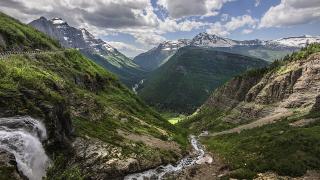
Glacier has 13 front-country campgrounds. Seven take reservations and six are first-come, first-served.
| Type | Campgrounds |
|---|---|
| Reservation only (Recreation.gov) | Apgar, Avalanche, Fish Creek, Many Glacier, Sprague Creek, St. Mary, Two Medicine |
| First-come, first-served | Bowman Lake, Cut Bank, Kintla Lake, Logging Creek, Quartz Creek, Rising Sun |
- Booking window: most reservable sites open on a rolling basis six months ahead of the night you want; a handful are held back and released four days ahead. The busiest dates go within minutes, so be online when your date opens.
- Fees: $15 to $30 per night in summer; hiker/biker sites $8 per person. Refunds are not available.
- Stay limits: 14 nights in total from July 1 to Labor Day, 30 nights for the rest of the year. Up to 8 people, 2 vehicles and 2 tents per site.
- Vehicle length: combinations over 21 ft are not allowed at Bowman Lake, Cut Bank, Kintla Lake, Logging Creek, Quartz Creek, Sprague Creek or Rising Sun; the biggest sites at Apgar and St. Mary take 40 ft.
- Cut Bank requires Scan & Pay in the Recreation.gov app. Text "GNPCGS" to 333111 for alerts when campgrounds fill.
2026 had several closures. Two Medicine campground was closed all season for road and utility work expected to run into late 2027, Logging Creek was closed, and St. Mary has partial closures from fall 2026 to spring 2027 while water lines are replaced. In winter, loop B at Apgar stays open for first-come primitive camping, with no drinking water.
Yellowstone campgrounds
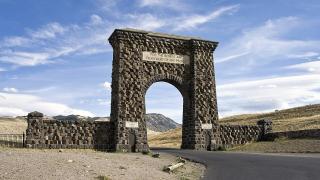
Almost all of Yellowstone's campgrounds are in Wyoming, but several are a short drive from the Montana gateways at Gardiner and West Yellowstone. Every site in 2026 needed a reservation, except Mammoth's first-come winter sites from October 15 to April 1.
| Campground | Booked through | 2026 season | Fee |
|---|---|---|---|
| Mammoth (5 mi from Gardiner) | Recreation.gov | Year-round | $25 |
| Slough Creek | Recreation.gov | June 15 to October 12 | $20 |
| Tower Fall | Recreation.gov | May 22 to September 27 | $20 |
| Indian Creek | Recreation.gov | June 12 to September 14 | $20 |
| Madison (14 mi from West Yellowstone) | Park concessioner | May 1 to October 17 | $38 plus tax |
| Pebble Creek | Recreation.gov | Closed for flood recovery | — |
- Recreation.gov sites open on a rolling basis exactly six months before the night of your stay.
- The five larger campgrounds (Bridge Bay, Canyon, Grant Village, Madison and Fishing Bridge RV Park) were booked through the park's lodging concessioner in 2026. From the 2027 summer season they move to Recreation.gov, also about six months ahead.
- No car camping or overnight parking outside campgrounds anywhere in the park.
Montana state parks
Montana's 55 state parks are run by Fish, Wildlife & Parks (FWP), and many have campgrounds.
- Booking window: up to three months ahead and no later than one day before arrival, at fwp.mt.gov/stateparks or 855-922-6768.
- Reservable season: the third Friday in May to the third Sunday in September. Outside it, sites are first-come.
- Stay limit: seven nights per site, which keeps at least 20% of sites free for first-come campers.
- Fees: $4 to $34 a night depending on season and hookups, plus the day-use fee for nonresidents ($8 per vehicle, or a $35 7-day / $50 annual pass).
Good examples: Whitefish Lake State Park, 25 sites beside the lake and the railway; Bannack, a 28-site campground at the ghost town, open all year; and Lost Creek, 25 first-come sites in a canyon near Anaconda, open mid-May to November 30.
National forest and BLM camping
Montana's national forests have hundreds of developed campgrounds, many bookable on Recreation.gov. Hyalite Canyon near Bozeman has three that run from about mid-May to mid-September, and Lake Como near Hamilton has first-come campgrounds from late May to early September.
Dispersed camping (free camping away from developed sites) is allowed on most national forest land. The stay limit across Northern Region forests in Montana is 16 consecutive days at one site and 32 days in total per calendar year; the Beaverhead-Deerlodge counts 16 days in any 30. BLM land in Montana also caps stays at 16 days. To camp well:
- Use existing sites and fire rings rather than making new ones.
- Check fire restrictions at mtfireinfo.org; Stage 2 bans almost all open fires.
- Pack out all trash.
- Follow the food storage order for that forest (below).
Montana state trust land has its own rules and licences, which were under review in 2026; check with the Department of Natural Resources and Conservation (DNRC) before camping there.
Bear country rules and hard-sided-only campgrounds
Food storage is a legal requirement across much of western Montana.
- Glacier: food, drinks, cookware, toiletries and trash must be in a hard-sided vehicle or a food locker day and night. Scented items such as sunscreen, bug spray and deodorant may never be kept in a tent.
- Northern Continental Divide order: covers the Flathead, Lolo, Kootenai and Helena-Lewis and Clark forests and part of the Beaverhead-Deerlodge, March 1 to December 31 each year.
- Custer Gallatin order (Bozeman, Hebgen Lake, Gardiner, Yellowstone and Beartooth districts): March 1 to December 1, 2026. Store food in a hard-sided vehicle, an approved bear-resistant container, or hung at least 10 ft up and 4 ft from any tree or pole.
Some campgrounds go further and ban tents altogether. Soda Butte and Colter campgrounds near Cooke City are hard-sided vehicles only, with no tent camping. Soda Butte has 27 first-come sites and $20 nightly fees, and is usually open from late June or July 1 to Labor Day. Inside Yellowstone, Fishing Bridge RV Park is also hard-sided only. Rangers can impose temporary tent bans elsewhere after bear activity, so check the forest's alerts page before you go.
Cabins, yurts and glamping
If you want a bed without a hotel, there are three public options and many private ones.
- Forest Service rental cabins and lookouts: old ranger cabins and fire lookouts across Montana's forests, booked on Recreation.gov; summer weekends go months ahead. Most are rustic: no running water, vault toilet, wood or propane heat, and some are reached only on foot or skis in winter.
- State park cabins and yurts: some parks rent them, booked through the same FWP system and three-month window as campsites.
- Private glamping: canvas safari tents, yurts and cabins with beds are offered near the Glacier and Yellowstone gateways and around Flathead Lake. Prices are usually closer to a hotel than a campsite. Ask whether the site is inside a food storage order area and whether tents have hard-sided food storage.
Remember Montana's 8% lodging tax applies to campgrounds and rentals as well as hotels.
Before you go
- Note the date six months before your Glacier or Yellowstone stay and be online when it opens.
- Book state park sites three months ahead, from mid-May to mid-September.
- Carry bear spray and a way to store food in a hard-sided vehicle or locker.
- Check whether your campground is hard-sided only.
- Check fire restrictions and food storage orders for your forest.
- Have a first-come backup plan and arrive before noon.
Details checked October 2026.