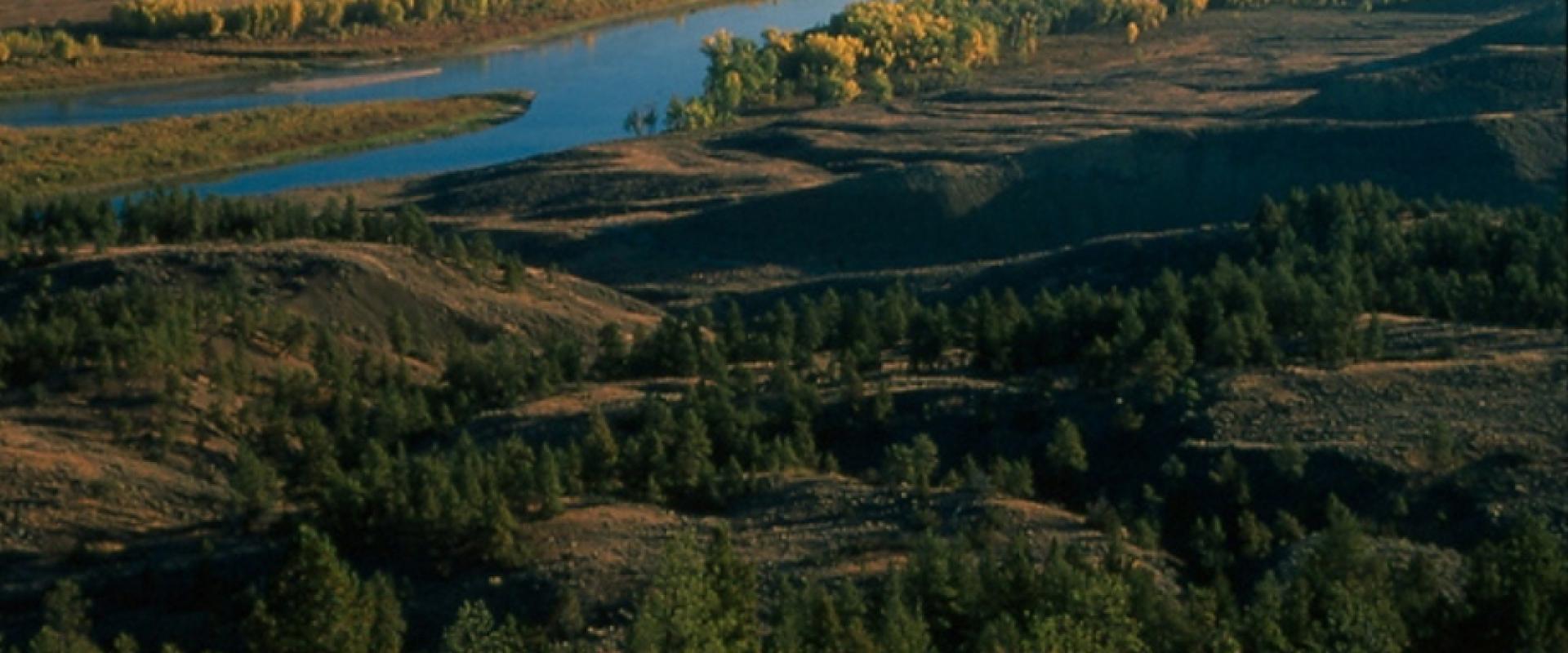
Montana still has every large mammal that was here when Lewis and Clark came through in 1805: grizzly bears, wolves, bison, elk, moose, mountain goats, bighorn sheep, pronghorn and wolverines. Few places in the lower 48 can say that. Most of those animals came close to vanishing in the state, though, and how they are managed now is among the most argued-over questions in Montana politics.
This guide explains the state of the main species and ecosystems in 2026, the threats from invasive species and fire, and where to learn more on the ground. For where and when to watch animals, and the distance rules, see our wildlife watching guide.
Grizzly bears: still threatened, decision due December 2026
Grizzlies in the lower 48 have been listed as threatened under the Endangered Species Act since 1975, and in October 2026 they still are.
- January 2025: the US Fish and Wildlife Service rejected petitions from Montana and Wyoming to delist the Northern Continental Divide and Greater Yellowstone populations, and proposed a single lower-48 listing with a new section 4(d) management rule.
- July 17, 2026: the Service proposed substantive changes to that 4(d) rule, which reporting described as shifting more day-to-day management to the states, and reopened comments until August 17.
- Deadline: under a federal court order in Idaho, a final rule that revises or removes the lower-48 listing is due by December 18, 2026. Check fws.gov for the outcome.
The bears themselves are spreading. A rangewide report in late 2025 put the Greater Yellowstone population at about 1,050, and found the Northern Continental Divide population (Glacier, the Bob Marshall and the Rocky Mountain Front) had expanded its range by about 12% in two years. Grizzlies now turn up on the prairie east of the mountains. Our health and safety guide covers bear spray and food-storage orders.
Wolves: back on their own, now state-managed
Montana had no breeding wolves for about half a century before 1986. They came back two ways: wolves from Canada recolonised Glacier, raising pups there in 1986, and wolves were released in Yellowstone and central Idaho in 1995 and 1996. In April 2011 a congressional budget rider removed wolves in Montana from the endangered list, and Montana FWP has managed them, with hunting and trapping seasons, ever since.
| Measure | Figure |
|---|---|
| 2025 population estimate (FWP's revised model, iPOM 2.0) | 725 wolves (range 618 to 836) |
| 2025 estimate under the older model | 1,094 wolves in 181 packs |
| Wolves taken in the 2025-26 season | 247 (145 by hunters, 102 by trappers) |
| 2026-27 statewide quota | 300, season opened September 5, 2026 |
FWP says the new model has not yet been peer-reviewed, and conservation groups argue the quota is too high given the uncertainty. National parks are closed to hunting, so Yellowstone's wolves are protected while inside the park.
Bison: from two dozen to thousands
Between 30 and 60 million bison once roamed North America. By 1902 poaching had cut Yellowstone's herd to about two dozen, the last wild bison on the continent. Yellowstone is the only place in the US where bison have lived continuously since prehistoric times, and its herd numbered nearly 5,300 in 2025.
- Why they leave the park: in winter bison move north and west into Montana to find grass. Montana tolerates them only in small zones next to the park, mainly because of brucellosis, a disease that can cause abortions in cattle; up to 60% of Yellowstone bison test positive for exposure. The Interagency Bison Management Plan, set up in 2000, coordinates federal, state and tribal agencies.
- Tribal transfers: since 2019 more than 600 live Yellowstone bison have gone through quarantine to the Assiniboine and Sioux Tribes at Fort Peck and on to 29 tribes in 13 states and one Canadian province. Fort Peck received 211 in 2026.
- Other herds: the CSKT Bison Range near Moiese (about 350 bison, tribal-managed since 2022), and American Prairie in Phillips County, which started with 16 bison in 2005 and reports more than 900. American Prairie's grazing on federal land remains disputed.
Elk migrations
Elk are the most widespread big animal in western Montana, and many herds migrate between summer range in the high country and winter range in valleys. The Northern Yellowstone herd is the best-known: in an April 2025 helicopter count Montana FWP saw 7,226 elk, 6,124 of them outside the park in Montana, in the Gardiner basin and Paradise Valley. On the plains, hundreds gather each autumn for the rut at Slippery Ann in the Charles M. Russell National Wildlife Refuge. Migration routes cross highways and private ranches, so watch for elk on the road at dawn and dusk from October to April.
Crown of the Continent
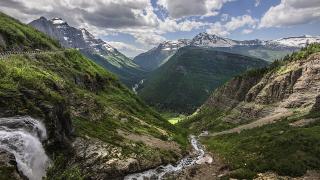
North of Missoula the Rockies form one of the most intact ecosystems in North America, the Crown of the Continent: about 10 million acres across Montana, Alberta and British Columbia, centred on Glacier National Park (more than a million acres) and Canada's Waterton Lakes. The two parks became the world's first International Peace Park in 1932 and a joint UNESCO World Heritage Site in 1995. With the Bob Marshall, Great Bear and Scapegoat wildernesses to the south, the area still supports grizzlies, wolves, wolverines, lynx, mountain goats and native bull and westslope cutthroat trout.
Invasive species
- Mussels: larvae of zebra or quagga mussels were detected in Tiber and Canyon Ferry reservoirs in 2016. No adults followed, both were later cleared, and neither species is known to be established in Montana. In 2025 inspectors found mussels on 38 of more than 120,000 boats checked, and in April 2026 FWP added golden mussels to the state's invasive list. Every boat must be inspected; see our water activities guide.
- Flathead Lake: lake trout were stocked in 1905. When non-native Mysis shrimp reached the lake in 1981 the food web flipped: kokanee salmon were gone by 1989, lake trout boomed and native bull trout fell to about 1,300 by 1996. Bull trout have been federally threatened since 1999, and the Confederated Salish and Kootenai Tribes run lake trout removal on the southern half of Flathead Lake.
- Weeds: noxious weeds covered about 8.2 million acres, just under 10% of the state, in a 2017 estimate. Spotted knapweed is the most widespread. Brush seeds off boots, bikes and tyres between trailheads.
Fire ecology
Fire is part of how these forests work. Lodgepole pine has cones that open in heat, and many grasslands need fire to stay open. The 1910 "Big Burn" scorched about 3 million acres of northern Idaho and western Montana in a few days and killed about 85 people; it led the Forest Service to adopt aggressive suppression. In 1949 the Mann Gulch fire near Gates of the Mountains killed 13 firefighters. In 1988, fires burned 793,880 acres of Yellowstone, 36% of the park, and the regrowth is now a living lesson in forest recovery. The Missoula Smokejumper Visitor Center explains modern firefighting.
Where to learn more
| Place | Town | What it covers | Season |
|---|---|---|---|
| Grizzly & Wolf Discovery Center | West Yellowstone | Grizzlies and wolves that can't live in the wild | Every day of the year |
| Montana WILD (FWP) | Helena | State wildlife and fish exhibits; free | Monday to Friday, 8 a.m. to 5 p.m. |
| Smokejumper Visitor Center | Missoula | Wildland fire and smokejumping | Summer tours; rest of year limited, call 406-329-4934 |
| Museum of the Yellowstone | West Yellowstone | 1959 earthquake, 1988 fires | Mid-May to mid-October; reopens early May 2027 |
| Fort Peck Interpretive Center | Near Glasgow | Prairie wildlife, fossils, fish | Fri to Mon through October 31; then by appointment |
Before you go
- Check fws.gov after December 18, 2026 for the grizzly listing decision.
- Read the wildlife watching guide for places, seasons and distance rules.
- Get boats inspected for invasive species before every launch.
- Clean seeds off gear between trailheads.
- Check fire restrictions and smoke maps in July to September.
Details checked October 2026.