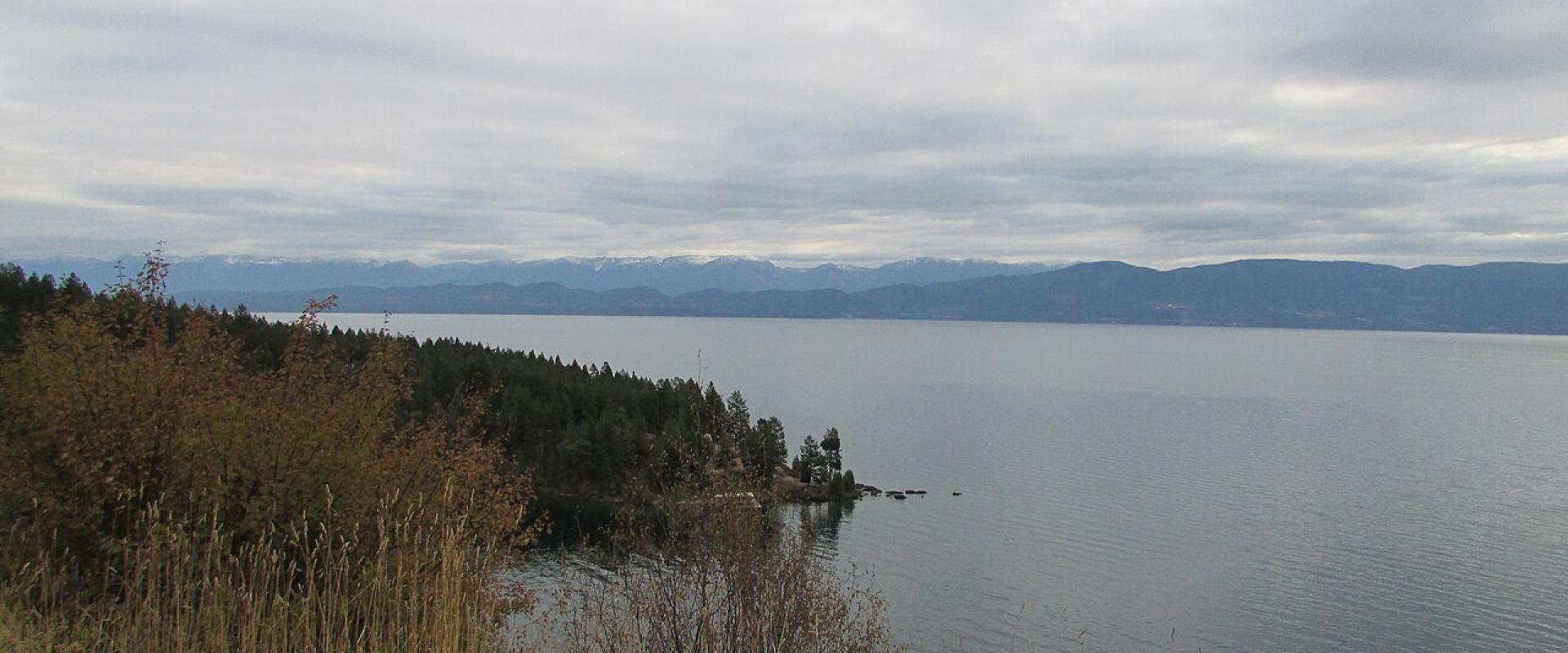
Montana's rivers and lakes are open to the public in a way few states match. The 1985 Stream Access Law lets anyone float, fish and wade on rivers that can be used for recreation, up to the high-water mark, whoever owns the land on either side. Rafting outfitters run whitewater trips near Glacier, Big Sky and Yellowstone, and Flathead Lake is the biggest natural freshwater lake in the western US by surface area.
Bringing your own boat takes more planning. Every watercraft entering Montana must be inspected for aquatic invasive species before it launches, nonresidents must buy a prevention pass, and the water is cold enough to be dangerous even in August. This guide covers the main whitewater runs, lake boating, the 2026 inspection rules, river access and safety.
Whitewater rafting: three classic runs
| River | Base town | Usual run | Difficulty | Season |
|---|---|---|---|---|
| Middle Fork of the Flathead | West Glacier | Moccasin Creek access on US-2 down to West Glacier | Class II to III | About May to September |
| Gallatin | Big Sky / Bozeman | Gallatin Canyon along US-191, including the Mad Mile | Class III; Class IV at high water | Late spring to late summer |
| Yellowstone | Gardiner | Town stretch below Gardiner; Yankee Jim Canyon downstream | Class I to II in town; II to III in the canyon, IV at high water | Late spring to late summer |
Middle Fork of the Flathead
The Middle Fork forms Glacier National Park's southern boundary along US-2 and is part of the Flathead Wild and Scenic River system. The popular whitewater day trip starts at the Moccasin Creek access and finishes at West Glacier, through rapids with names like Tunnel, Bonecrusher, Washboard and Jaws. For young children, the gentler Class I to II float runs about 5 miles downstream from West Glacier to Blankenship Bridge. High water usually peaks in late May.
Gallatin River
The Gallatin runs right beside US-191 in the canyon between Big Sky and Bozeman, which makes scouting easy. Its best-known stretch, the Mad Mile, begins at House Rock rapid. At high water in June and July it behaves like Class IV, with near-continuous waves; from about August it drops to Class III but becomes more technical. Some outfitters set higher minimum ages during high water.
Yellowstone River near Gardiner
The Yellowstone is the longest undammed river in the lower 48 states. Just outside the park, the town stretch below Gardiner is mostly Class I and II, and floats of about 8 miles are possible in a half day. Farther downstream, Yankee Jim Canyon, about 5 to 6 miles of Class II to III water with rapids called Boxcar and Big Rock, becomes much bigger at high flows. Note that all rivers inside Yellowstone National Park are closed to boating, except the channel between Lewis and Shoshone lakes for non-motorized craft.
Flathead Lake and other lakes
Flathead Lake is about 30 miles long and up to 16 miles wide, with Polson at its south end and Bigfork near the north-east corner.
- Access: Flathead Lake State Park has six units: Big Arm, Finley Point, Wayfarers, West Shore, Yellow Bay and Wild Horse Island, which is reached only by boat. Nonresidents pay $8 per vehicle for day use.
- Tribal waters: the southern half lies within the Flathead Reservation. You need no tribal licence to boat or swim on the lake, but fishing the south half needs a tribal licence ($19 plus fees for non-members in 2026/27).
- Wind: afternoon winds rise quickly. Check the National Weather Service forecast before taking a small boat or paddleboard far from shore.
Other good lakes include Whitefish Lake, where every boat must be inspected before launch, Lake McDonald in Glacier, Clark Canyon Reservoir near Dillon, and Hyalite Reservoir near Bozeman, a no-wake lake.
Aquatic invasive species inspections: the 2026 rules
Montana is fighting to keep zebra and quagga mussels out, and the rules apply to canoes, kayaks, rafts and paddleboards as well as motorboats.
- Inspection before launch: all watercraft coming into Montana from another state must be inspected before launching on Montana waters. Inspections at stations in Idaho, Wyoming and Alberta also count.
- West of the Divide and the Flathead Basin: boats crossing west over the Continental Divide, or launching in the Flathead Basin after last launching outside it, must also be inspected first.
- Stop at every open station: all motorized and non-motorized watercraft must stop at every open inspection station they pass, even if inspected the same day. Failing to stop can bring a fine of up to $700.
- Decontamination: boats with ballast tanks or bladders, such as wake boats, must be decontaminated before launching.
- Clean, drain, dry: remove all plants from boat and trailer before driving, pull the drain plug when you leave the launch, and don't transport surface water, which is illegal in Montana.
Vessel AIS Prevention Pass: nonresidents launching in Montana must buy one from FWP online or at a regional office. It costs $30 for motorized boats and $10 for non-motorized craft, including drift boats, canoes, kayaks, rafts and stand-up paddleboards. It expires December 31 and can't be moved between boats. Inner tubes, air mattresses and windsurfers are exempt. An inspection usually takes less than 10 minutes; decontamination can take about 30.
The national parks run their own systems. In Glacier, every boat needs an inspection and a free launch permit; the Apgar station runs from the second Sunday in May to October 31. In Yellowstone, every boat needs a park inspection and a permit ($20 for 7 days non-motorized, $40 for 7 days motorized), from Memorial Day weekend to October 31.
River access: where you can get on the water
- Under the Stream Access Law you may use a river up to the ordinary high-water mark and portage around obstacles.
- Reach the water legally: from FWP fishing access sites, public land, or a public bridge or road right-of-way. You can't cross private land without permission.
- Camping on the river is allowed only when it is needed to use the river, out of sight of or more than 500 yards from an occupied house.
- FWP runs hundreds of fishing access sites. Its online map is the easiest way to find put-ins and take-outs.
Cold-water and river safety
- Cold water: FWP warns that water below 70 °F can cause a swimmer to collapse and drown. Flathead Lake has been in the 50s °F in mid-June in past seasons.
- Life jackets: every person on a vessel, including paddleboards, must have one on board, and children under 12 must wear one on a moving boat. Wear one yourself on any river.
- Spring runoff: rivers run fast, high and full of logs in May and June. Wood jams and bridge piers are deadly.
- Know the flow: check USGS river gauges before a private float, and pick sections within your skill.
- Tell someone your plan: many rivers have no phone signal.
Fishing licence pointer
Anglers 12 and over need a Montana conservation licence, an angler AIS prevention pass and a fishing licence. For nonresidents in 2026 that is $10 plus $7.50, then $14 for 1 day, $56 for 5 days or $100 for the season. The angler AIS pass is separate from the vessel pass above. Yellowstone needs its own park fishing permit, and fishing on reservation waters needs a tribal licence. Our passes and permits guide has the full table, and the Madison River page covers that river's stricter rules.
Before you go
- Buy the vessel AIS pass online before you tow or carry a boat into Montana.
- Get inspected before your first launch, and stop at every open station.
- Clean, drain and dry your boat between waters.
- Pack life jackets for everyone and wear them on rivers.
- Check river flows and the wind forecast on the day.
- Use public access sites, never private land.
Details checked October 2026.