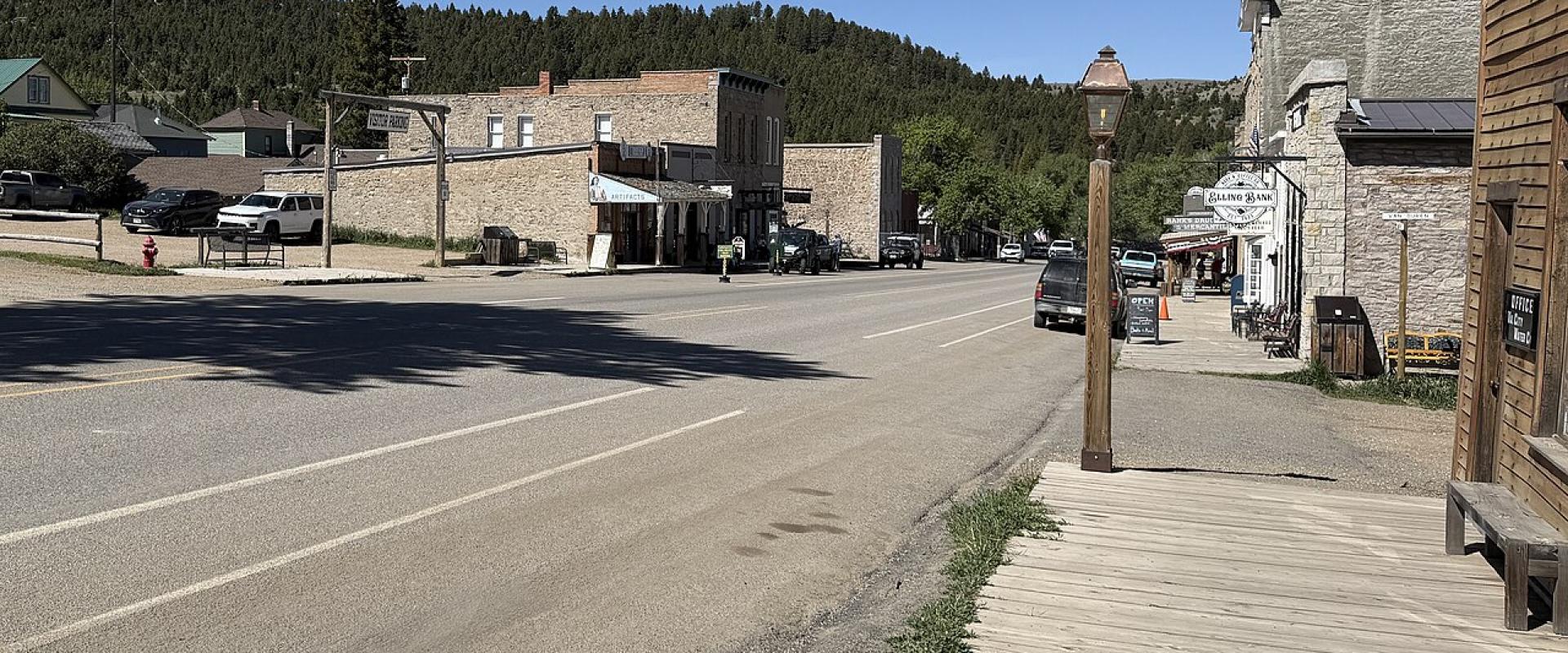
Most of Montana's rules will be familiar to any US driver, but a few catch visitors out. Interstate speed limits reach 80 mph. Cannabis is legal for adults but not in Glacier or Yellowstone. And there is no statewide ban on texting while driving, though several cities have their own. Away from the roads, two laws shape almost every day outdoors: the 1985 Stream Access Law, which opens rivers to the public, and the trespass law, which keeps the land along them private.
This guide sets out the rules a visitor is most likely to meet, with the section of the Montana Code Annotated (MCA) where one applies, plus the unwritten etiquette of ranch country and hunting season. Fines are the amounts in the 2025 code.
Driving: speed limits, seatbelts and phones
| Rule | What the law says | Source |
|---|---|---|
| Interstate speed limit | 80 mph outside urbanized areas of 50,000+; 65 mph in them | MCA 61-8-303 |
| Other highways | 70 mph by day, 65 mph at night | MCA 61-8-303 |
| Seatbelts | Every occupant must be belted; $20 fine | MCA 61-13-103, -104 |
| Child seats | Under 6 years and under 60 lb need a child restraint | MCA 61-9-420 |
| Drunk driving | 0.08 blood alcohol; THC limit 5 ng/ml of blood | MCA 61-8-1002 |
| Open container | No open alcohol in the passenger area; fine up to $100 | MCA 61-8-1026 |
- Night speed limits are lower. On highways other than interstates the limit drops from 70 to 65 mph from half an hour after sunset to half an hour before sunrise, the hours when deer and elk are on the road. Posted limits can differ from the defaults.
- Seatbelts are a secondary offense for adults. Police can't stop you only for not wearing one, but they can if a child under 6 and under 60 lb is unrestrained. The $20 fine isn't recorded on your driving record.
- Phones: Montana is the only state without a statewide texting ban for adult drivers; a 2025 bill for one failed. Several cities, including Missoula, Bozeman and Helena, have their own bans on texting or handheld phone use, so put the phone down anyway.
- Open containers: the law doesn't apply to a locked glove box, the trunk, behind the last upright seat, or the living area of an RV or camper.
- Road conditions: check 511mt.net or dial 511. Many passes need winter tires or chains from October to May.
Cannabis
Recreational cannabis has been legal for adults since January 1, 2021, and licensed dispensaries have sold it since January 1, 2022.
- Age 21+ with valid ID; out-of-state visitors can buy.
- Limit: 1 ounce of usable cannabis, of which no more than 8 grams may be concentrate, and edibles up to 800 mg THC (MCA 16-12-106).
- No public consumption (MCA 16-12-108), and no smoking in a hotel room unless it is a designated smoking room.
- No use while driving, and passengers can't smoke or consume it in an enclosed vehicle that is moving.
- Federal land is different. Cannabis is still illegal under federal law, so it is banned in Glacier and Yellowstone national parks, national forests and on other federal land. Don't take it across state lines either.
Rivers and private land: the Stream Access Law
Montana's 1985 Stream Access Law (MCA 23-2-302) lets the public use rivers and streams that can be used for recreation, whoever owns the bed. You can float, fish and wade up to the ordinary high-water mark.
- Getting to the water: use a public fishing access site, public land, or a public bridge or county-road right-of-way, and stay within the right-of-way (MCA 23-2-312). You can't cross private land to reach a river without permission.
- Inside the high-water marks: you may portage around obstacles, and you may camp overnight only when it is needed to use the river and you are out of sight of, or more than 500 yards from, an occupied house.
- Not included: big-game hunting, ATVs, private ponds, and leaving permanent objects such as duck blinds.
- Montana FWP runs hundreds of fishing access sites; its map is the easiest way to find public put-ins.
Fences, gates and trespass
Montana's trespass law (MCA 45-6-201) lets landowners post land with written signs or with orange paint: at least 50 square inches on a post, or the whole post if it is metal. Treat orange-painted posts as "No Trespassing".
- Hunters always need permission on private land, posted or not (MCA 87-6-415). First-offense fines are $135 to $500.
- Leave every gate the way you found it. An open gate may be letting cattle reach water; a closed one may be keeping them off a highway.
- Don't climb fences. Look for a gate, a stile, or the public route.
- Many dirt roads cross private ranches. Stay on the road, don't park in gateways, and slow down for livestock and cattle guards.
- Cattle on the road: on open range, give way and pass slowly. Don't honk or push through a herd.
Hunting season: wear orange
The 2026 general deer and elk rifle season runs October 24 to November 29, after archery season in September and October.
- Hunters must wear at least 400 square inches of fluorescent hunter orange above the waist (MCA 87-6-414). Hikers aren't required to, but you should wear orange or another bright color on national forest and BLM land in the fall too, and put an orange vest on your dog.
- Expect gunfire near trailheads at dawn and dusk, and hunters' vehicles on forest roads.
- National parks are closed to hunting, so Glacier and Yellowstone are good choices for fall hiking. Hunting is allowed in national forests.
Fireworks and fire restrictions
- Fireworks may be sold only from June 24 to July 5 and December 29 to 31 (MCA 50-37-106). They are illegal on all public land in Montana, including state DNRC land, BLM land, national forests and national parks. Many cities and counties restrict them further.
- Fire restrictions come in stages through summer and fall. Under Stage 1, campfires are usually allowed only in developed campground rings; Stage 2 bans almost all open fires. Check mtfireinfo.org for the area you are visiting, and never leave a fire until it is cold to the touch.
Wildlife: distance, feeding and drones
- National parks: stay at least 100 yards (91 m) from bears and wolves and 25 yards (23 m) from all other wildlife, including bison and elk, in both Glacier and Yellowstone. Visitors who approach can be cited.
- Don't feed wildlife. In the parks it is a federal offense, and under state law (MCA 87-6-216) it is illegal to attract deer, elk, bears, mountain lions or wild turkeys with feed.
- Drones are banned in national parks, including Glacier and Yellowstone, and at the CSKT Bison Range.
- Bear country: carry bear spray in western Montana and the Yellowstone area, store food in a hard-sided vehicle or bear box, and camp where food-storage orders apply.
- On reservations, tribal law applies, and fishing or boating needs a tribal permit, not a state license.
Before you go
- Set cruise control to the posted limit; 80 mph applies only on rural interstates.
- Buckle everyone up and use a child seat for kids under 6 and 60 lb.
- Keep cannabis out of national parks and forests, and never use it in public.
- Reach rivers from fishing access sites or bridges, never across private land.
- Leave gates as you find them, and respect orange-painted posts.
- Wear orange in the woods from late October to late November.
- Check mtfireinfo.org before lighting any fire.
- Stay 100 yards from bears and wolves and 25 yards from other animals.
Details checked October 2026.